If you're like most homeowners in the Charlotte and Lake Wylie area, you want your property to look stunning after dark. But here's the thing – most landscape lighting installations around here are doing more harm than good. You're probably making at least three of these seven mistakes right now, and they're costing you money while making your home look less impressive than it should.
Don't worry though. Every mistake has a simple fix, and once you know what to look for, you'll start noticing these problems everywhere in your neighborhood. Let's dive into the biggest landscape lighting mistakes we see around Lake Wylie and Charlotte, and more importantly, how you can fix them right away.
Mistake #1: You're Turning Your Yard Into a Football Stadium
What You're Doing Wrong
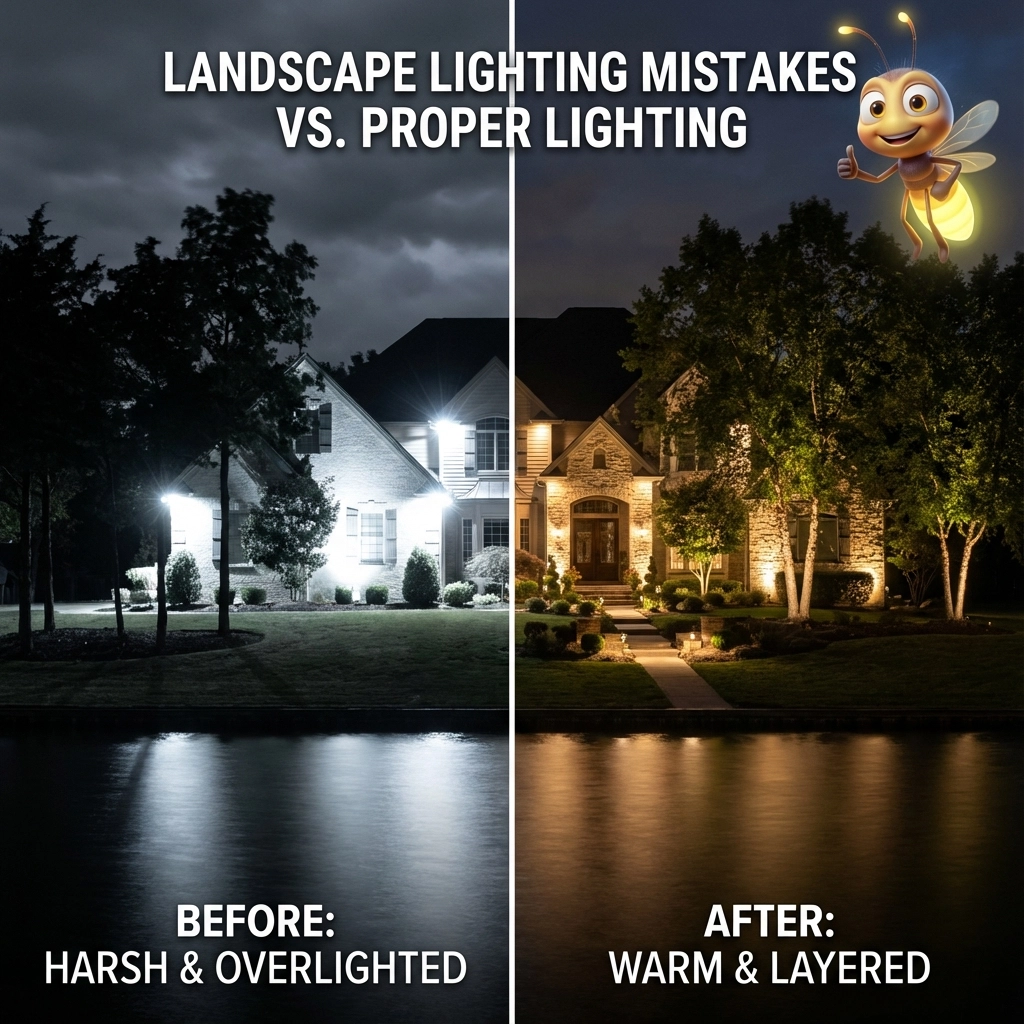
You've probably driven through neighborhoods in Charlotte where every tree, shrub, and blade of grass is lit up like it's game day. This is the number one mistake we see – using way too much light or choosing fixtures that are way too bright for residential use.
Your firefly mascot is shaking his little head right now because overlighting kills the magic. It washes out your home's beautiful architectural features, creates harsh shadows that make your landscaping look flat, and honestly makes your property feel more like a parking lot than a welcoming family space.
The Easy Fix
Think of fireflies in nature – they create gentle, warm glows that enhance the evening atmosphere without overwhelming it. Your landscape lighting should do the same thing. Use fewer fixtures with warmer LED lights, and focus on creating layers of light rather than flooding everything with brightness.
Start by identifying just three to five key features you want to highlight – maybe a beautiful oak tree, your front entrance, and a pathway. Light these thoughtfully, and you'll create the kind of magical evening atmosphere that actually makes your neighbors jealous.
Mistake #2: You're Using Those Cheap Solar "Glow Worms"
What You're Doing Wrong
We see them everywhere around Lake Wylie – those little solar path lights that give off about as much light as a dying cell phone screen. They create what we call the "glow worm effect" – tiny, weak dots of light that don't actually illuminate anything useful.
These cheap solar lights are tempting because they seem easy and inexpensive, but they're actually making your property look cheap and poorly maintained. Your firefly friend knows that real fireflies are bright enough to see by – these solar imposters aren't even close.
The Smart Solution
Invest in quality low-voltage LED fixtures that connect to a proper transformer system. Yes, this means running some wiring, but the difference is night and day. These lights will actually illuminate your pathways for safety, last for decades, and give you consistent, reliable lighting every single night.
For Lake Wylie's climate, you want fixtures rated for outdoor use that can handle our humidity and occasional storms. Quality LED fixtures use less energy than those old halogen bulbs while providing much better light output.
Mistake #3: Your Lights Are in All the Wrong Places
What You're Doing Wrong
Here's what we see constantly around Charlotte – lights placed wherever it was convenient to dig a hole, not where they actually need to be. Fixtures too close together, too far apart, pointing in random directions, or stuck right out in the open where everyone can see them during the day.
Poor placement creates uneven lighting, weird shadows, and makes your whole system look amateur. Your firefly mascot wants to remind you that real fireflies know exactly where to position themselves for maximum impact.
The Right Way to Position Everything
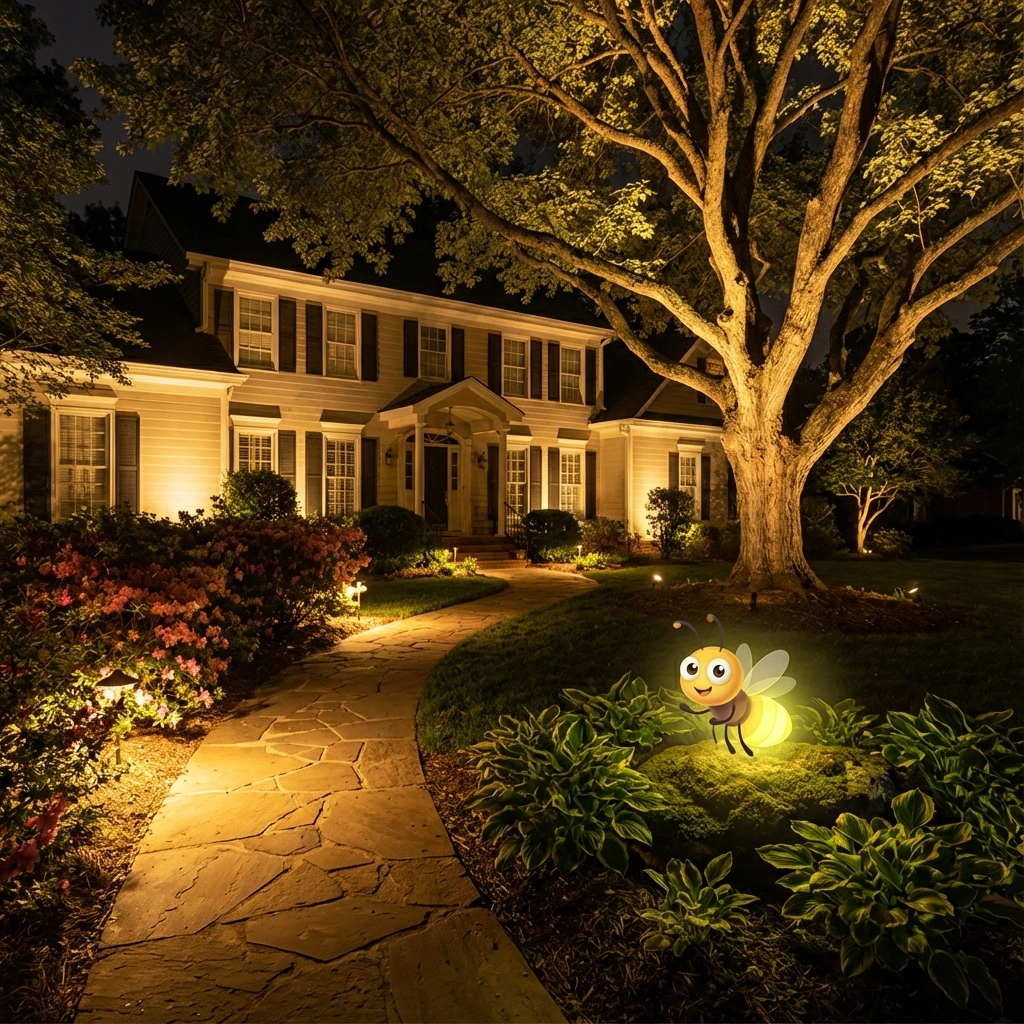
Walk around your property after dark and identify the areas that actually need light – your main walkways, stairs, key landscape features, and entrance areas. Then position fixtures where they'll provide even coverage without being visible during the day.
Hide fixtures behind shrubs, under plants, or in landscape beds where they'll be concealed but still effective. For pathway lighting, space fixtures about 8-10 feet apart for even coverage. For uplighting trees or architectural features, position lights close to the base and angle them properly to avoid glare.
Mistake #4: Your System is Fighting Voltage Drop (And Losing)
What You're Doing Wrong
This is the technical mistake that most homeowners don't even know they're making. Voltage drop happens when your electrical current weakens as it travels along your wiring, especially on longer runs. The result? Lights that get dimmer the further they are from your transformer, creating uneven lighting across your property.
You'll notice this if some of your lights seem brighter than others, or if lights at the end of your runs are significantly dimmer. Your firefly mascot understands that consistent brightness is key to professional-looking lighting.
How to Fix Voltage Drop Issues
Use the right wire gauge for your distances – typically 12 AWG for runs up to 100 feet, and 10 AWG for longer distances. If you have a large property around Lake Wylie, consider installing multiple transformers or using a higher-capacity transformer with multiple zones.
For existing systems showing voltage drop, you can often fix the problem by upgrading your wiring or adding a second transformer. This is definitely worth having a professional evaluate, especially if you're dealing with Charlotte's clay soil that can be tough on buried wiring.
Mistake #5: You Skipped the Professional Design Phase
What You're Doing Wrong
Most homeowners around Lake Wylie try to wing it with landscape lighting. You buy a kit from the home improvement store, follow the basic instructions, and hope for the best. But lighting design is actually pretty complex – it involves understanding light levels, beam angles, fixture types, and how different elements work together.
DIY lighting usually results in lighting that works okay but doesn't create the stunning nighttime curb appeal you were hoping for. Your firefly friend knows that nature's lighting is all about strategic placement and timing.
Why Professional Design Makes All the Difference
A good lighting designer will walk your property and create a plan that highlights your home's best features while providing the safety and security lighting you need. They understand things like beam angles, light layering, and fixture selection that make the difference between amateur and professional results.
For Lake Wylie properties, professional designers also understand local considerations – like dealing with lakefront moisture, highlighting water views, and working around the mature trees that make this area so beautiful.
Mistake #6: You Install and Forget (Until Something Breaks)
What You're Doing Wrong
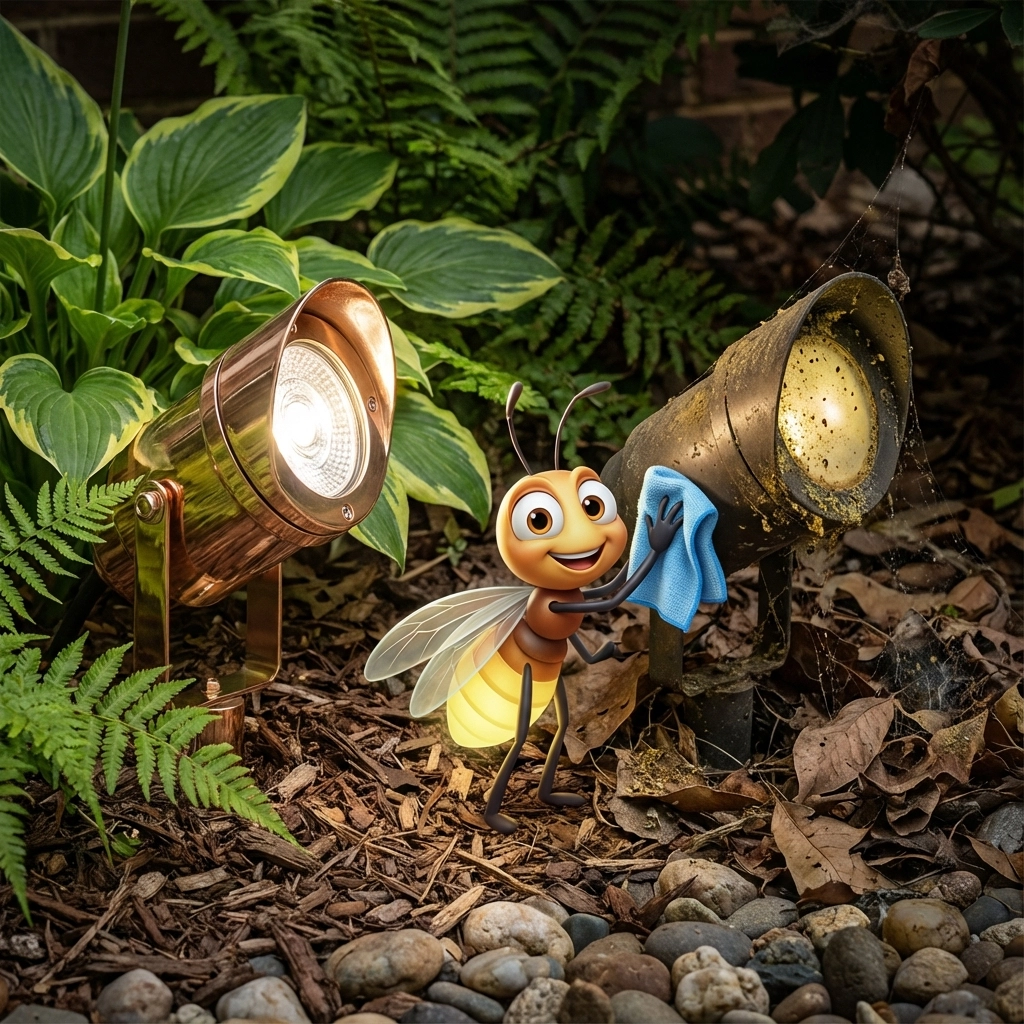
Landscape lighting isn't a "set it and forget it" system, but most homeowners treat it that way. Over time, fixtures get dirty, bulbs burn out, connections corrode, and plants grow to block your carefully planned lighting effects.
Around Charlotte's humid climate, fixtures can accumulate dirt, pollen, and moisture that reduces their light output significantly. Your firefly mascot wants to remind you that even natural lighting needs seasonal adjustments as plants grow and seasons change.
Simple Maintenance That Keeps Everything Looking Great
Clean your fixtures twice a year – once in spring and once in fall. This simple step can improve light output by 30% or more. Check your connections annually for corrosion, especially if you have any above-ground wiring.
As your landscaping grows, you'll need to adjust fixture positions or trim plants that block your lighting effects. This is normal and expected – think of it as fine-tuning rather than fixing problems.
Set up a simple maintenance schedule and stick to it. Your lighting system will look better and last much longer with just a little regular attention.
Mistake #7: Your Lights Look Like Angry Blue Hospital Lighting
What You're Doing Wrong
Color temperature matters more than most people realize. If your landscape lighting has that harsh, blue-white color (usually anything over 4000K), you're creating an uninviting, sterile atmosphere that works against all your other outdoor design efforts.
Cool white lighting might seem brighter, but it actually makes your landscaping look washed out and your outdoor spaces feel cold and unwelcoming. Your firefly mascot glows warm and golden for a reason – that's the color temperature that feels natural and inviting.
Choosing the Right Color Temperature
For residential landscape lighting around Lake Wylie, stick with warm white LEDs in the 2700K to 3000K range. This creates the golden, welcoming glow that makes your property feel like home rather than a commercial space.
This warmer light enhances the natural colors in your landscaping, makes your home's exterior materials look richer, and creates the kind of evening atmosphere where people actually want to spend time outdoors.
Making It All Work Together
The truth is, great landscape lighting around Lake Wylie isn't about having the most lights or the brightest lights – it's about creating the right atmosphere while providing the safety and security your family needs. When you fix these seven common mistakes, you'll have lighting that actually enhances your property value while making your evenings more enjoyable.
Your firefly mascot approves of lighting that works with nature rather than against it. Start with one or two of these fixes, and you'll immediately notice the difference. Before long, you'll have the kind of evening curb appeal that makes your Charlotte-area home the envy of the neighborhood.
Ready to transform your property's nighttime appearance? Get a free estimate and let's create lighting that actually works for your Lake Wylie lifestyle.